Hamas War

Showing posts with label Land of Israel. Show all posts

Monday, July 11, 2022

Shmitta 5782 Berry Picking at Bikurei Shilo


Moriah Rapaport Shapiro is seen here talking
to our group about Shmitta and the story of the 
picking farm Bikurei Shilo.
Shmitta, The Sabbatical of the Land comes every seven years, parallel or similar to our Holy Shabbat Sabbath which is every seven days. The big difference is that while Shabbat is required for all Jews in all parts of the world, and even universe, shmitta is only for those fruits and vegetables grown in the Land of Israel on Jewish owned Land.

During our two thousand years of exile, when Jews weren't working or owning the Land, shmitta became an unobserved and unknown mitzvah, even more so than the Mitzvot only observed in the Holy Temple. 

Shmitta only became relevant again when Zionist pioneers began farming in the Land of Israel. Rabbis, Jewish landowners and farmers-- many who weren't Torah observant have been struggling for well over a century to find ways to faithfully observe the mitzvah without damaging the economy. A few years ago, I reviewed a fascinating book about how the pioneers of Mazkeret Batya struggled for the rights to strictly observe shmitta, Rebels in the Holy Land, The Story of Mazkeret Batya.

Before we were allowed to pick the fruit, blueberries and raspberries, Moriah explained to us the history of the "farm" and psak, Torah decisions it's basing its shmitta practice. The fruit which is now ripening is the holy seventh 7th year fruit, so it can be eaten but not wasted. Any which must be thrown out is put in special receptacles, which they will handle later.

After the talk, we were each given a small container and set off to pick the fruit. The blueberries are delicious, a real treat. We got a lot of exercising while picking, since the ripe ones were low down on the bushes. There were very few raspberries ripe for the picking when we were there. Later in the season there will also be blackberries, Gd willing.

For more information on when to visit, open Sunday-Friday except for Jewish holidays, contact 0527966630. Bikurei Shilo is at the western side of the Shilo Junction and can be reached by car or bus. Individuals, families and groups are welcome. Their facebook page is in Hebrew, but you can message them in English. 

You can arrange tours and shmitta explanations in Hebrew and/or English for families and groups. Other activities are "tractoron" tours among the vineyards, bows & arrows, blow up playground activities, pitta baking, arts & crafts and more. Give them a call.

Besides the picking fruit, they sell all sorts of snacks including an "ice pop" made of their own fruit, which is absolutely delicious. There's also a playground for children.

We had a wonderful time, highly recommended for all ages.


Tuesday, October 20, 2020

Save The Date: Rosh Chodesh Kislev


Chances are that Rosh Chodesh Kislev will be colder than Rosh Chodesh Cheshvan was. And Gd willing we'll have already been blessed by a nice rainfall or two or more by then. But whether we'll need to equip ourselves with coats, umbrellas or whatever's... we'll still need to mask up. 

The world has changed, but the Jewish Calendar hasn't. We're still governed by the moon's cycles, adjusted periodically so holidays will fall in the correct seasons. There's nothing more amazing than the Jewish Calendar which has rooted us to the Land of Israel, even during millennia of exile. I consider our ancient/modern calendar the unmistakable proof that the Land of Israel is the true home for the Jewish People. Our religion/calendar revolves around the seasons in the Land of Israel.

Rosh Chodesh Kislev falls in early winter. I keep track of Rosh Chodesh, because of our Women's Prayers at Tel Shiloh, Shiloh Hakeduma. This year:

Women's Rosh Chodesh Prayers, Tel Shiloh

Tuesday, 1st of Kislev 17-11-2020, 8:30am

For more information shilohmuse@gmail.com

תפילת נשים שילה הקדומה

יום ג', א' כסלו תש"פ 8:30

לפרטים נוספים shilohmuse@gmail.com 

Shiloh Hakeduma, Tel Shiloh is a stunning archeological site, the location of the Biblical Tabernacle. Tours can be arranged for the entire family, all ages. 02-5789122 visit@telshilo.org.il 

Sunday, May 17, 2020

Parshat Shavua Bahar, The Connection of Shmitta to Mt Sinai


I'm certainly not competing with the venerable and respected Rashi, but a half a century after making aliyah, moving to Israel, I definitely see a strong connection between Shmitta and Mt Sinai.

The connection between Shmitta and Mt Sinai is very simple. It's the paramount centrality of the Land of Israel to the foundation of Torah and Mitzvot. Since there are mitzvot that can only be observed in the Land of Israel, all Jews should be living here.


Vayikra - Leviticus - Chapter 25

1And the Lord spoke to Moses on Mount Sinai, saying,
אוַיְדַבֵּ֤ר יְהֹוָה֙ אֶל־משֶׁ֔ה בְּהַ֥ר סִינַ֖י לֵאמֹֽר:
on Mount Sinai: What [special relevance] does the subject of Shemittah [the “release” of fields in the seventh year] have with Mount Sinai? Were not all the commandments stated from Sinai? However, [this teaches us that] just as with Shemittah, its general principles and its finer details were all stated from Sinai, likewise, all of them were stated-their general principles [together with] their finer details-from Sinai. This is what is taught in Torath Kohanim (25:1). [And why is Shemittah used as the example to prove this rule, especially since the very fine details are not even specified here (Sefer Hazikkaron)?] It appears to me that its explanation is as follows: [At the plains of Moab, Moses reiterated the majority of the laws of the Torah to the Israelites before their entry into the land of Israel, this reiteration comprising most of the Book of Deuteronomy. Now,] since we do not find the laws of Shemittah [“release”] of land reiterated on the plains of Moab in Deuteronomy, we learn that its general principles, finer details, and explanations were all stated at Sinai. Scripture states this [phrase] here to teach us that [just as in the case of Shemittah,] every statement [i.e., every commandment] that was conveyed to Moses came from Sinai, [including] their general principles and finer details [and that the commandments delineated in Deuteronomy were merely] repeated and reviewed on the plains of Moab [not originally given there].
בהר סיני: מה ענין שמיטה אצל הר סיני, והלא כל המצות נאמרו מסיני, אלא מה שמיטה נאמרו כללותיה ופרטותיה ודקדוקיה מסיני, אף כולן נאמרו כללותיהן ודקדוקיהן מסיני, כך שנויה בתורת כהנים. ונראה לי שכך פירושה לפי שלא מצינו שמיטת קרקעות שנשנית בערבות מואב במשנה תורה, למדנו שכללותיה ופרטותיה כולן נאמרו מסיני, ובא הכתוב ולמד כאן על כל דבור שנדבר למשה שמסיני היו כולם כללותיהן ודקדוקיהן, וחזרו ונשנו בערבות מואב:

2Speak to the children of Israel and you shall say to them: When you come to the land that I am giving you, the land shall rest a Sabbath to the Lord.
בדַּבֵּ֞ר אֶל־בְּנֵ֤י יִשְׂרָאֵל֙ וְאָֽמַרְתָּ֣ אֲלֵהֶ֔ם כִּ֤י תָבֹ֨אוּ֙ אֶל־הָאָ֔רֶץ אֲשֶׁ֥ר אֲנִ֖י נֹתֵ֣ן לָכֶ֑ם וְשָֽׁבְתָ֣ה הָאָ֔רֶץ שַׁבָּ֖ת לַֽיהֹוָֽה:
a Sabbath to the Lord: For the sake of the Lord, just as is stated of the Sabbath of Creation (see Exod. 20:10) [i.e., just as every seventh day is a holy Sabbath day, acclaiming that God Himself rested on the seventh day and thus acclaiming that God is the Supreme Creator of all existence, likewise, man must rest from working the land on the seventh year, for the sake of God, not for the sake of the land, so that it should gain fertility by lying fallow for a year]. — [Sifthei Chachamim ; Torath Kohanim 25:7]
שבת לה': לשם ה', כשם שנאמר בשבת בראשית:

3You may sow your field for six years, and for six years you may prune your vineyard, and gather in its produce,
גשֵׁ֤שׁ שָׁנִים֙ תִּזְרַ֣ע שָׂדֶ֔ךָ וְשֵׁ֥שׁ שָׁנִ֖ים תִּזְמֹ֣ר כַּרְמֶ֑ךָ וְאָֽסַפְתָּ֖ אֶת־תְּבֽוּאָתָֽהּ:

4But in the seventh year, the land shall have a complete rest a Sabbath to the Lord; you shall not sow your field, nor shall you prune your vineyard.
דוּבַשָּׁנָ֣ה הַשְּׁבִיעִ֗ת שַׁבַּ֤ת שַׁבָּתוֹן֙ יִֽהְיֶ֣ה לָאָ֔רֶץ שַׁבָּ֖ת לַֽיהֹוָ֑ה שָֽׂדְךָ֙ לֹ֣א תִזְרָ֔ע וְכַרְמְךָ֖ לֹ֥א תִזְמֹֽר:
Yes, I understand that for even the most Torah observant and learned Jew living out of the Land of Israel, the Laws of Shmitta appear theoretical and even irrelevant. This was certainly even more so a thousand years ago, the time of Rashi, when nobody could seriously envision fruitful Jewish agriculture and a Jewish State in the Holy Land, Land of Israel. Christian crusaders had been invading and destroying much of the Land of Israel in the name of their god. Jewish Life was under attack all over the world, especially in the Holy Land. Christian and Muslim theologians needed to prove that Judaism was dead and they were the god appointed replacements. Of course, they would then have to fight each other for the ultimate title.

A hundred and fifty years ago the Zionist Movement brought a new relevance to Shmitta and all other Torah Commandments, mitzvot that can only be observed in the Land of Israel. Close to three years ago I reviewed Rebels in the Holy Land - Mazkeret Batya - An Early Battleground for the Soul of Israel, which tells of how the pioneers who established Mazkeret Batya risked everything to revive the mitzvah of Shmitta.

Poskim, rabbis who are considered as qualified/learned to make decisions based on the Torah, must look seriously at the new realities of today and not base their decisions on Jewish Life of a thousand years ago, a hundred years ago, before the Establishment of the State of Israel and even before Israel's miraculously victory in the Six Days War. The Establishment of the State of Israel and the post-Six Day War were major game-changers for the Jewish People. Gd gave us the Torah to be lived in our world, not to be rooted to the past. We are now sovereign in the Land of Israel, and it's time for all Jews to come home. Otherwise, you may miss the boat.

Saturday, April 13, 2019

Shiloh, A Place of Great Beauty

As you know, I live in Shiloh. Some of you even know that I take walks, mostly for fitness. The other day my walking partner and I decided to change our route a bit. We took a short detour, right near our neighborhood, and it was such a treat.


Shiloh is in the center of the Biblical Heartland. It is mentioned many times in the Bible. We Jews have more connections to Shiloh than almost any other part of the Land of Israel. Only Jerusalem and may Hebron could have more.

Tuesday, March 5, 2019

Power of Gd

Jewish Theology integrales two rather contradictory concepts, The Power of Gd and the Gift He gave us, Free Will. I don't have time to delve into this complicated relationship now, but today I witnessed some of Gd's Powers.

As I was doing some things in the living area of my house, which faces east, south and west, I noticed that the sky to the west was getting dark. That could mean rain. And then suddenly I saw a strange flash to the east. I began to wonder if that had been lightning, when suddenly I heard a boom, thunder. So retroactively I knew that it had been lightning.

A few seconds later I had already taken out a siddur, Jewish Prayer Book, and said the appropriate blessings:


We humans like to think that we're clever, but we can't fully control the weather. Here in the Land of Israel, Gd uses the weather as a barometer to show approval or disapproval of our behavior. Some years we have perfect quantities of rain at the best times, accompanied by the right heat and cold facilitate miraculously blessed harvests. There are other years when lack of rain, too much or badly timed rain, along with damaging temperatures turn our Land into a barren wilderness. This doesn't happen by chance.

May we succeed in following Gd's Commandments correctly and deserve the best weather for the fertility of The Land of Israel.

Sunday, February 24, 2019

שתי גדות לירדן Shtay Gadot LaYarden, From Shiloh

Last Sunday we attended a gala Betar reunion in the Jerusalem Theater, and part of the program was singing the old Betar songs. Of course, שתי גדות לירדן Shtay Gadot LaYarden, Both/Two Sides of the Jordan was included.

I always get a kick out of that song. I always wonder if there's anyone besides us whose house faces that very view. Our house faces east. That's why I can take pictures of the sunrise. East of Shiloh is the Jordan Valley, and east of that is the Jordan River. And on the other side of the Jordan River is the British invented Hashemite "Kingdom" of Jordan, which is on the eastern bank of the river.

Yes, on a clear day or night, we can see both sides of the Jordan from our house, including lights at night. Sorry for illustrating this post with a morning photo, which doesn't the eastern mountains.


Tuesday, October 23, 2018

Celebrating Yom Aliyah Day

Last year I celebrated Yom Aliyah Day by officially performing stand up for the first time, something I could cross of my "bucket list." This year my husband and I attended a Betar-Likud event to which immigrants/olim from all over the world were invited.


photo taken by Yisrael Medad, from Betar blog


It was in a Netanya hotel, and I found us places to sit at a table that had a sign saying "English" on it. Other tables had Spanish and French signs. We ended up sitting with some old friends from American Betar and our shlichut, youth work job in London.

We enjoyed the rendition of Betar songs by the young band that performed. And, of course, it was nice to get together with old friends. Not everyone at our table knew enough Hebrew to understand the speeches, which was a shame. There should have been some multilingual greetings to make them feel truly welcome.

Many of my closest friends here in Israel are olim, immigrants. We come from wide and varied backgrounds. Everyone contributes to the flavor of life in Israel, like the holy Biblical ketoret, which was a combination of a wide variety of "fragrances," some ingredients being very bitter on their own. But mixed in the recipe that Gd instructed, they combined into something exquisite. That is our life here in Israel, Israeli society.

We feel very privileged to be in this wonderful time, when we see the fulfilment of Gd's promises to the Jewish People. I have no doubt that things will get even better. Jews, join us for your own sake, לך לך, Come to the Holy Land to live with us.

All except one, photos by me, Batya Medad

Sunday, October 21, 2018

Hiking Through Emek Shiloh Valley עמק שילה

Last Friday at high noon, a multigenerational group from גוש שילה Gush Shiloh Bloc took off together under the guidance of Land of Israel, Eretz Yisrael guide extraordinaire Zeev Ehrlich


A treasure trove of little-known history and Biblical geography, Ehrlich told us about the unusual nature of the massive Shiloh Valley and its place in Jewish History.


Apparently today's growth of Jewish communities around Emek Shiloh Valley עמק שילה isn't new. Over the millenia, even a few hundred years ago, there were also Jewish towns surrounding the valley and  taking advantage of the fertile land for agriculture.


Zeev Ehrlich
The tour was sponsored by the עמק שילה- ועד מקומי Emek Shiloh-Vaad Mikomi, vote עמ list for the Local Council. In recent years the גוש שילה Gush Shiloh Bloc has grown enormously in every way. It's situated between just west of Highway 60 and goes all the way eastwards to the Alon Road. There's potential for much more growth, since most of the Land is government owned. That's why the new community of Amichai, designated especially for the former Amona families/residents, is located here. 

I'm supporting this list, because I feel that it has the most vision for growth and unity. In order to maximize our potential the numerous existing communities must give up some independence and work together. This is a process that has played out all over Israel. Many of today's major and successful cities also began as small independent communities. No doubt that the גוש שילה Gush Shiloh Bloc will remain a combination of rural and suburban, but too much money and manpower are now being wasted.

The Biblical stories centered in גוש שילה Gush Shiloh Bloc are well-known, and it was very exciting to learn of Jewish life here during other times, even long after the Destruction of the Second Holy Temple. As you can see from the pictures, there's plenty of empty Land for Jewish Life here in גוש שילה Gush Shiloh Bloc.

Wednesday, September 26, 2018

Succot ושמחת בחגך Why the Joy?

One of Judaism's interesting questions is:
Why is the Succot Holiday called the "Joyful" one? ושמחת בחגך
The other day, while walking outside in Shiloh and wondering when Gd will bless us with cleansing and health-producing, also necessary for agriculture rain, I noticed the grapes.  OK, I didn't need to go very far to see grapes, since we have a few vines by our house.

The grapes are rather dusty, and some are dried out, eaten by birds, bees etc. And the leaves are awfully brown and ripped. But there are still grapes for humans to feast on.


I began to think of how it must have been in olden times, a few thousand years ago, when food storage meant drying and pickling food. Instead of refrigerators, freezers and modern containers, they used caves and ceramic urns. 

In this late summer season, people couldn't rely on piped water from high tech reservoirs, desalination, drip agriculture etc. It hasn't rained for six months. We frequently complain of the high prices of fruit and vegetables, because the summer crops are finished and the winter ones can't grow without water. The products of modern high tech agriculture isn't cheap.

How did our ancestors manage? During the almost four hundred years of the Mishkan, Tabernacle in Shiloh, there may have been grapes growing right where my grapes grow today. Considering how easily grapes grow here without any professional care, it's obvious to me that this is the Land Gd created for grape growing.

Finding and preparing sufficient food for the many late summer, Tishrei holidays is challenging enough in today's modern world. It's hard to imagine how much more difficult it was thousands of years ago. And then think of the joy when the food was served. Or many the mitzvah, the commandment to be joyful helped them enjoy what they could find to eat.

In Ancient Times, I doubt that the sukkot one lived in during the holiday was built onto people's homes or terraces. They left the comfort of their home to go up to Shiloh and later to Jerusalem for mass prayers. Conditions weren't like today's hotels, three enormous meals and unlimited afternoon cake. Vineyards like mine were treasured and shared, since there wasn't much to eat.

People were grateful and joyful for what they had ושמחת בחגך Visamachta bichaggecha, And be joyful in Your holiday.

Sunday, August 12, 2018

Shiloh at Forty 40, The Dream Keeps Growing

As I blogged earlier, we in Shiloh are still celebrating forty 40 years since the return of Jewish Life to one of the holiest cities for Jews.  As Yehoram Gaon mentioned during his performance, Shiloh as the most important city for the Jewish People predates Jerusalem.

The anniversary events from Thursday night until and including Shabbat are supposed to be the end of about a year of celebrations. It has been a very thrilling time. In all honesty, I feel very privileged  to have taken part and be part of such a miracle, the revival of Jewish Life in the Land of Israel. And  no doubt this will be considered an extremely important event in Jewish History, like Ezra and Nechemia.


On Shabbat there were two get-togethers during which now-adults who grew up in Shiloh, some who were born when their parents had already moved to Shiloh while others came as children, spoke about what they've made of their lives. A few live in Shiloh, raising third a third generation of Shiloh residents, while others live in cities, other yishuvim and some of our locally grown kids have even founded/established new communities far and wide in the Land of Israel.

It was interesting to hear how their childhoods in Shiloh have influenced their lives and decisions as adults. The community life and chesed, helping neighbors taught them a lot, and they have all integrated that into their present lives.

One thing mentioned was so deja vu for me. I remember at a Bnai Akiva youth movement ceremony about twenty-five 25 years ago, a neighbor of my generation told the youth that she grew up trying to emulate her parents, chalutzim, who built a new community in the early days of the State of Israel. For that reason, she and her husband were among those to establish Shiloh. On Shabbat, one of the children raised in Shiloh said that she felt it important to emulate her parents and establish a new community.

We consider ourselves and our younger generations as the continuation of the early Zionist pioneers. This isn't a matter of political Right or Left; it is just pure Zionism, the return of the Jewish People to the Land of Israel. 

I thank Gd for the privilege to live in such a holy and historic location, Shiloh. And even more than that I thank Gd for giving me life in the generation which has seen such great miracles as the 1967 Six Days War and the opportunity to help bring Jewish Life to Our Holy Land.

Wednesday, May 16, 2018

The Land of Israel is Central to Judaism, Not a "Yetzer Haraa"

I got some very peculiar reactions to my blog post about Israel's Eurovision win. Someone even called me on my home phone to tell me how objectionable he found that article. He kept referring to Netta Barzalai as "an abomination." I honestly don't understand how he can say that.

As female performers go, Netta was rather covered up. She used a costume, rather than her skin to get people's attention. This caller and some of them who commented on my blog had the gall to insist that as a religious person, I should condemn her and the song. Also they suggested that I have nothing to do with Eurovision. You can check the comments on the post if you're curious.

All I can say is that they are not my rabbi, and I didn't ask their opinion. I mentioned how Rav Kook had even seen the good in the chalutzim, pioneers who worked the Land, even if they considered themselves secular. The caller was horrified when I said that, claiming that Rav Kook would side with today's chareidim, which I consider rather unlikely.

One of those who commented said something I consider awful:
"...I'm not "condemning" anyone, I'm criticizing. Not Neta B and other non-observant Israelis, but members of the religious public that have made love of the land into a form of avoda zara."  Emphasis mine
Honestly, it goes against the very basic principles of Judaism to remove/ignore the Land of Israel. First of all I don't see us as "worshiping it." What we do is recognize the centrality of the Land of Israel to Judaism.

Judaism is not like any other religion. Judaism is Land-based. Christianity, for instance, isn't; it has no diaspora. The moslem calendar is a simple lunar one which makes the holidays float from season to season. Those religions can be observed equally anywhere.

The Jewish Calendar is the only which is both lunar and solar. This guarantees that our holidays will fall in the correct season. Jews all over the world pray for rain and dew when they are best needed in the Holyland, in ארץ ישראל the Land of Israel. There are many mitzvot that can only be performed the Land of Israel. We are supposed to live here in the Holyland.

Remember that the baal teshuva phenomenon began after the Establishment of the State of Israel, especially after the phenomenally miraculous 1967 Six Days War victory. Before then, the trend was to reduce religious observance, not to increase it. Our return to the Land and sovereignty, even as imperfect as it presently is, has rejuvenated Torah living.

We must keep looking for the good in what is being done and do our best to make things better, not to criticize and look for the faults.

Thank Gd for the miracles and wonders He performs for us. And we mustn't forget that it is our responsibility to do our best for Judaism, The Jewish People and the Land of Israel.


When I look back on the half a century I've lived here in the Land of Israel, I see such phenomenal improvement in so many aspects of Jewish Life and Nationhood, Baruch Hashem!

Monday, February 19, 2018

Aliyah: Not The "Ultimate Sacrifice"

Not long ago I heard a speaker say something that I found so outrageous, sacrilegious, 'חילול ד chillul Hashem, disparaging of Gd and the Land of Israel, that I searched him out afterwards to tell him how upset he had gotten me. He had called Aliyah "The Ultimate Sacrifice."

Of course I understand that Aliyah, the move to Israel is sometimes more difficult for others as it was for me, but to call it The "Ultimate Sacrifice" puts a value on living outside of Eretz Yisrael, the Land of Israel over living here that has no place in Judaism or reality.

Of course there are adjustments one must make in any move, whether from Brooklyn to Monsey or Monsey to Jerusalem. Most people find any change traumatic, especially when the decision is made by someone else. And sometimes parents don't "market it well" for their kids or find the right educational framework. In any move, parents must be sensitive to their children's needs and advocate for them. I'm still upset with my parents' oblivion to my suffering when we moved from Bayside, NYC, NY to Great Neck, NY. Even though the physical distance was just a few miles, the educational system was totally different. I was put back a grade, and my parents hadn't a clue or didn't care. Maybe it was the parenting style of that time, but nobody, neither parents nor school guidance counselors, ever spoke to me about it.

Moving to Israel, making Aliyah, is totally different from any other move. First of all, Gd commanded us to live in Eretz Yisrael, the Land of Israel. Many of the mitzvot, Torah commandments can only be done here. Besides that, there are government offices and Nefesh B'Nefesh which are dedicated to facilitating the absorption, adjustment, of olim chadashim, newcomers to Israel.

Unlike when my husband and I made aliyah, came here in 1970, Israel is on the same if not higher technological, standard of living as any place else in the world. Today's Israel also has one of the world's strongest economies.

Every move demands change and adjustment. But if you are angry about the decision that had been made for you, learning to see the good and adjusting will be near impossible.

Israel is a wonderful, beautiful country, full of goodness, miracles and chessed. To me it's a sacrifice living any place else.

Before one of my sons went into the IDF he was in a program which had a very good fitness trainer who always said:
הכל בראש
Hakol barosh.
"It's all in your head."
The meaning is that you actually can control your feelings and capabilities. If you look at Aliyah as  The "Ultimate Sacrifice," then you will always feel victimized by it, rather than a privileged beneficiary of living here in Gd's HolyLand.


Wednesday, January 31, 2018

TU B'Shvat, A Real Holiday?

One of the most enigmatic Jewish "holidays" is TU B'Shvat, the 15th of the Jewish Month of Shevat which takes place towards the end of winter. It's more a day to be "noted" than celebrated. There are no mitzvot, commandments to be observed. And there's nothing forbidden. Torah observant Jews don't need to take a day off from work, either. Nor are special prayers said. This essay by Batsheva Haber on the Matan site gives a lot of background.

TU B'Shvat is celebrated most by Jewish preschools and elementary schools, most pragmatically because the Jewish curriculum is rather paltry over a month after Chanukah and a month before Purim. Talking and teaching about fruit grown in the Land of Israel, when it's often too cold to play outside, can be lots of fun.

Whenever my friends and I get together to compare notes on what we all did for TU B'Shvat as children, whether in my Conservative Jewish after school program, the best Jewish school in Paris or even in religious schools here in Israel we have similar stories. We ate raisins, dried figs and buksa, hard teeth-breaking carob pods. This was to symbolize the Shivat Haminim,  the Seven Botanical Species grown in the Holy Land.

With the advent of political zionism and the establishment of the Keren Kayemet, Jewish National Fund, JNF, TU B'Shvat became a major marketing, programming and fundraising tool. TU B'Shvat became THE DAY to plant trees in the Holyland. It didn't really bother anyone that it was really a month or two past the optimal time to plant trees. Most of the very limited rainfall had already fallen, and without expensive and sometimes logistically difficult supplementary watering an outrageous amount of the trees so lovingly photographed would soon be dead. But planting trees on TU B'Shvat has become a major activity for schools and youth movements here in Israel.

To be honest, I too planted a tree the very first time I came to Shiloh. It was TU B'Shvat thirty-seven 37 years ago, and the small community was on a promotional drive to bring more families to live here. Friends, who have daughters the same ages as our daughters, told us about it, and the girls and I piled into their car to drive out to Shiloh. We planted trees and met the pioneering families. I fell in love with Shiloh and then just had to convince my husband that it would be our new home. Yes, obviously I succeeded, because we're here in Shiloh.

Davka, yesterday I planted a tree. I didn't do it because of the date. I planted it since after it had been sitting on my window sill for a year, it looked rather ill and lonely. Last year when I was teaching in Yeshiva Tichonit Ahavat Chaim, the yeshiva high school in Kochav Hashachar, the little "tree" had been sitting in the Teachers Room and offered to anyone who wanted. So, I took it home. I tried to care for it, but after a year it looked awfully sick. Either it will thrive outside or die.


Some of you may be waiting for me to mention a Seder TU B'Shvat. That's the ceremony more and more people are observing to celebrate TU B'Shevat. The only thing it has in common with the Passover Seder is wine. That can be a subject for another post, Gd willing.

Friday, May 26, 2017

Jewish Nationalism and History Unique and Proves Land is Ours

Workers at the Tel Shiloh archaeological site
Recent discoveries confirm that Shiloh remained an active city for thousands of years after the Tabernacle was destroyed. 
The other day I wrote Six Days War, Lots of Memories But No Pictures  and "shared it" to a Great Neck facebook page, since it was about my high school memories. Never in a million years did I expect the post to spark a vicious/vigorous debate about Jewish rights to this Land versus the Arabs.

Actually, it's still going on. The crux is whether or not just residing in a place gives someone national rights. Here are a few of the posts I wrote:
The only independent countries/kingdoms in this part of the world were Jewish. The Turks, British, Jordanians (a truly fake invented nation) etc were all invaders and occupiers. Learn history.
Were there Turks and British 2,000 years ago? List the kings/prime ministers of an independent country in this land during the 19th and early 20th centuries.
The only people/nation with a history of national aspirations for this part of the world is Jews. For all others, this land was just a place to be, but not their national homeland. Nomads passing through.
I don't think that the people arguing with me fully understand what a nation/people is, nor nationalist aspirations and history.

I certainly don't deny that there have never been non-Jews living in what we'll refer to as "the Holyland" from the time the Jewish Kingdom and Holy Temples were destroyed, invaded and occupied. But one must remember that those who ruled were occupiers/invaders, representing foreign kingdoms/countries.

The Arabs here had "city states," like there had been in Europe a few hundred years ago, but unlike Europe, they had no national aspirations and never evolved into a country. Even today, after enthusiastic and professional "mentoring" by foreigners, Arabs of Ramalla, Gaza, Shechem etc do not consider themselves as one people.  Compare that to Jews, who even two thousand years after being exiled and being forced to wander all over the world still have a united singular tradition of being a nation in this very Holyland, celebrate the same religious holidays, pray the same prayers and Bible in the same language and mourn the destruction of the same Holy Temple that stood in Jerusalem.

We Jewish People in The State of Israel aren't like any other. Our Jewish History confounds and even angers international military and economic experts. According to them, there was no way we could have survived the Holocaust. And even the countries that voted "yes" for a Jewish State in the United Nations, November 29, 1947, never expected us to survive. We had no allies, unlike the Arabs fighting us. And in 1967, our so-called friends again waited on the sidelines certain of our imminent demise. Instead of being pushed into the sea we liberated our Biblical Homeland and pushed our enemies past the Jordan River, to the Suez Canal and the the other side of the Golan Heights. Since then the "world" has put even more energy and money into inventing a "people" to replace us here in the Holyland. Unfortunately, even many Jews and Israelis have fallen for the con, the lie that we must share our tiny Homeland with Arabs who terrorize us, murder and maim.

Today our fight is more a war of words and ideas. We must stand strong and put our faith in Gd, not men and certainly not foreign leaders. In a few days we celebrate the Jewish Holiday of Shavuot, which can be translated as "Weeks" or "Oaths." Seven weeks from the Passover Holiday, and now we Swear and Oath to Gd to accept the Torah, accept the Laws Gd demands us to follow.

Chodesh Sivan Tov
Shabbat Shalom 
and Chag Sameach!

Rosh Chodesh Tammuz, 5777, will be Sunday June 25, 2017

Saturday, January 28, 2017

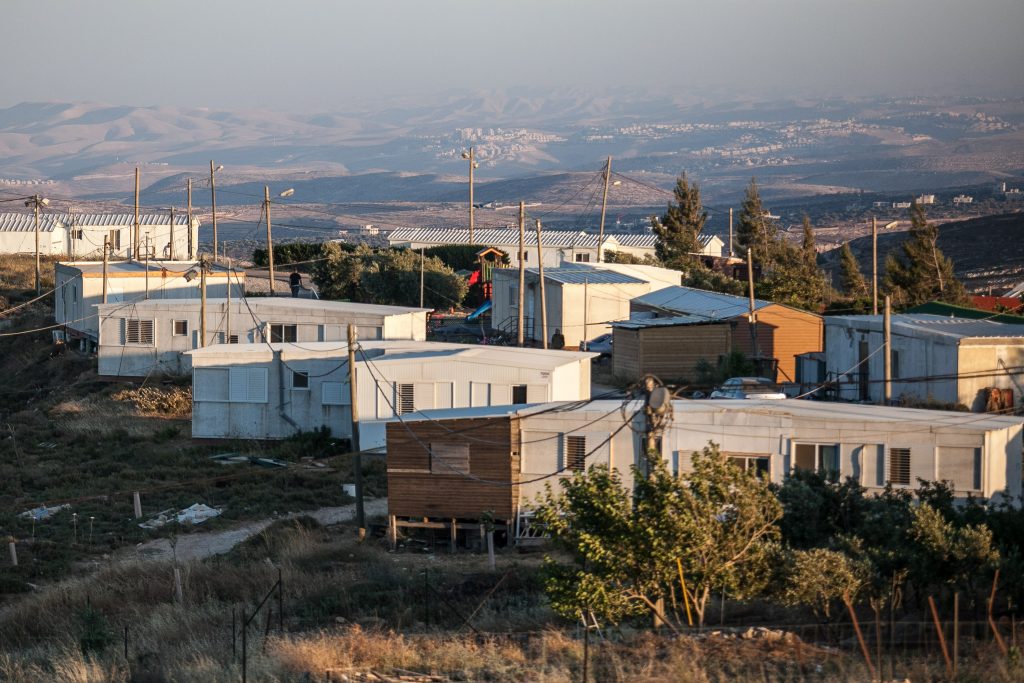
Amona, Deja Vu

A view of the Jewish outpost community of Amona. (Noam Moskowitz/Flash90) http://hamodia.com

Just a few short weeks ago, the residents of Amona made a very difficult decision. They agreed to allow a portion of their community to be moved for what was called "the greater good." The government made what seemed to be reasonable promises, and in order not to have a repeat of the violence that so traumatized us all eleven years ago, the residents very reluctantly agreed to the government's offer.

Israeli police clash with Jewish settlers at a burning barricade in the unauthorized outpost of Amona, close to the West Bank Jewish settlement of Ofra, Feb. 1, 2006. (photo by REUTERS/Oleg Popov) Read more: http://www.al-monitor.com/pulse/originals/2016/09/amona-outpost-settlements-netanyahu-yair-lapid-coalition.html#ixzz4X5UsuKOT


A settler struggled with Israeli security officers in 2006, when the Israeli government razed nine homes in Amona. Residents are preparing for another clash with their government. Credit Oded Balilty/Associated Press, NYTimes
And now, apparently, the nearby land promised to them is suddenly "problematic," too.

I don't think that anyone wants a replay of the violence of eleven years ago, but now "the ball is in the government's court," and it must make clear laws that protect Jewish Rights over ghost/fictional "landowners" who never really owned the land, never developed it and only were discovered by anti-Jewish settlement NGOs that have an agenda to destroy Jewish communities in Judea and Samaria.

I see this as part of the mechanizations being used to try to topple the Likud government. Netanyahu is under pressure for alleged corruption, and if the Amona agreement falls apart there will be pressure from the Right. Bibi certainly has plenty of balls to juggle if he wants to remain Israel's Prime Minister.

Saturday, November 12, 2016

Parshat Lech-Lecha, Jews Out of Israel Miss The Forest for The Trees

This is one of the most important lines in the entire Bible:

Genesis Chapter 12

1And the Lord said to Abram, "Go forth from your land and from your birthplace and from your father's house, to the land that I will show you.אוַיֹּ֤אמֶר יְהֹוָה֙ אֶל־אַבְרָ֔ם לֶךְ־לְךָ֛ מֵֽאַרְצְךָ֥ וּמִמּֽוֹלַדְתְּךָ֖ וּמִבֵּ֣ית אָבִ֑יךָ אֶל־הָאָ֖רֶץ אֲשֶׁ֥ר אַרְאֶֽךָּ:
Look at its chiastic structure:
A-B-B-A
A- land
B- birthplace
B- father's house
A- land
Here we have the first commandment that is specifically to Abraham, the first Jew. It's the land that frames this verse. Leave your old land to a new land that I will show you, says Gd to Abram, as he was called then.


Standard interpretations of the middle of that line explain that it means changing culture, religion etc. As I see it, the Jews who concentrate only on the religious observance, kashrut, Shabbat, holidays, and so on, but do that living in Chu"L, outside of the Land Gd showed us, the Land of Israel, have missed the forest for the trees. They just don't see, or live, the full Judaism for which one is required to be in the Holy Land.

The "big picture," the "forest" is living as a Jew here in the Land of Israel. And that is the rationale why in some of the Mitzvah counts to see what makes up the 613 Commandments, living in Israel isn't included. That's because it's taken for granted. Think of painting a picture without a canvas or paper. The Land of Israel is that canvas on which we paint a full Jewish Life with the Help of Gd Almighty.

Shavua Tov
Have a Wonderful Week


Friday, October 21, 2016

Thousands in Amona, but Not in the News

Yesterday, on my way to Sha'ar Binyamin, there was an enormous traffic jam by the entrance of Ofra.


Also reports from my daughter, who lives in Ofra, was that the crowd supporting Amona was tremendous!


I tried finding news reports about it, but it seems to have been ignored, even on Arutz 7, at least in English. So, if you find some articles about it, please put the links in the comments here, thanks.