Hamas War

Showing posts with label summary Megillat Esther. Show all posts

Friday, February 16, 2018

Adar, Purim, The Month of Joy

I had a very different post in my head that I may write in the future, but since today is the first of the Jewish Month of Adar, 5778, I decided that it wouldn't be appropriate.


We'll be celebrating Purim in two weeks or less depending on where you live. Purim is a Jewish Holiday which celebrates Gd's presence even when we don't see Him directly. The Megillat Ester, Scroll of Esther, which is read twice each Purim day, doesn't mention the Name of Gd.  But if you read the narrative carefully, you see that Gd is protecting the Jewish People behind the scenes.

It's the real Holiday of Joy, because we are commanded to be optimistic and trust Gd. This is not to be done passively. Purim is not a holiday to stand on the sidelines. We must act, even fight if necessary. When we do fight, Gd will help us. We also must pray and help other Jews.

Here in Shiloh, we celebrate two days of Purim, the regular one and what's known as Shushan Purim, which is the following day. I've heard the Megillah read over 140 times since moving to Shiloh, and the readings were all very clear and easy to follow. We, the Jewish People, have been celebrating the holiday for thousands of years, one of the proofs that we are the People of This Land and of the Bible.

At the end of the Megillah, we're commanded to give food gifts to our neighbors, and we do it to this day. Every time I hear it, I feel totally connected to the narrative in the Megillah. We read and listen to the story and follow the commandments, the same as Jews did two thousand years ago.

"When Adar begins, joy enters..."

Saturday, March 5, 2016

Purim: The Story of Esther, Typical Hidden Female

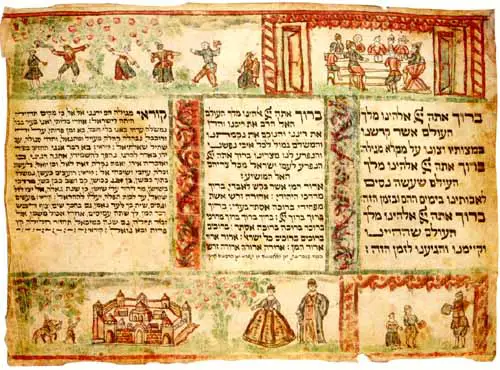
An Illustrated Megillah

Today at the Shabbat Women's class I've been going to pretty much every Shabbat for over thirty-four years, we had a "Pre-Purim" talk. It was actually by one of the younger women who has lived in Shiloh all her life and was a toddler when these classes began. I'm happy to say that there are lots of amazing people who were raised in Shiloh, and some of them have decided that Shiloh is great enough to raise their own kids here.

Well, we had this discussion about women in general and Queen Esther in particular. My reflections on it are mine and probably a distortion of the talk, but that's me.

The name Esther אסתר mean "hidden." And that in many ways is her role. Like many women, she plays second fiddle to the men. Mordechai, her relative, was the public Jew. He sat at King Achashverosh's gate and was well-known. He sent Esther to the "competition" to choose a new queen and told her to keep her Jewish identity a secret. She did, and she was chosen to be the next queen. Mordechai basically planted her as a "sleeper" agent.

But don't think that being a queen was such a great deal. Basically she was just to be kept beautiful for formal occasions. She was to be seen and not heard. She lived with the other women, kept beautiful just in case King Achashverosh needed a woman.

King Achashverosh was under the influence of Haman who hated Mordechai. So when Haman decided to not only kill Mordechai but to include all his Jewish brethren, King Achashverosh gave him full authority. That's when Mordechai's plan for Esther had to be activated. And that's when the puppet became the puppeteer. It was Esther, the hidden sleeper, who gave the orders and did the daring acts that saved the Jewish People.

And then, instead of being a real powerful queen, she went back into the the women's quarters and Mordechai retook his role as leader.

Thursday, March 13, 2014

A Very Important Purim Lesson for Today

I've just wasted a lot of time searching for a brief summary of Megillat (The Book of) Esther. Everything I found was much too wordy and even then left out a few important facts. As a high school EFL English Teacher here in Israel, I had to try to teach my students how to summarize. Everything I found on the internet was more of a paraphrasing and too many veered from the actual text by adding all sorts of midrashim and explanations. A summary should be a very bare outline missing many details, which I will try to write:
Mordechaiin sackcloth
After the destruction of the Second Holy Temple in Jerusalem, many Jews were exiled to Persia where King Achashveros declared national feasting by all in his own honor, which was marred by his Queen Vashti's refusal to appear. She was replaced by Esther, a Jew who neglected to admit her identity according to the instructions of her guardian Mordechai.
King Achashveros appointed Mordechai's enemy Haman as his top minister, even giving him the powerful signet ring to declare laws. Haman made a law to destroy the entire Jewish People from old to young.
Mordechai reported to Queen Esther to convince her to lead the struggle to cancel the law. Esther ordered the Jews to fast for three days and then risked her life by requesting an audience with King Achashveros who welcomed her. She invited him and Haman to attend a special feast and then to another one at which Queen Esther revealed that someone in King Achashveros's court is planning on killing her and her people.
King Achashveros sentenced that leader, Haman, to death and gave Mordechai the signet ring and permission for the Jewish People to fight and defeat their enemies. The Jewish People are victorious and have been celebrating the victory ever since.
That's a summary.  If you want more details read Aish, Wikipedia, Ohr Sameach or anything else you can google.

Arthur Szyk
Most people get distracted by the more humorous and ironic parts of the story, those I left out of my summary.  There's the irony of Haman's expecting to be paraded around as "the person the king wants to publicly thank and praise," while it's Mordechai whom Haman must fit out in the king's finest. Mordechai is the person Haman has sworn to destroy. He even built a tall structure to hang him in view of all, but it ends up being used to hang Haman.

We shouldn't get distracted and lose our focus from the gist of the story. The Jewish People were saved because of two very crucially important reasons;

  • We recognized our enemies.
  • We physically fought them.
We did not negotiate, nor did we try being nice.  We made no excuses for them, nor did we try to "understand" their problems.

And just like we still celebrate the Puim Holiday, fasting, feasting, giving food and monetary gifts, we must take that old TNT tried 'n tested lesson to heart.

We will not live in peace until we physically destroy our enemies!

Chag Purim Sameach!!